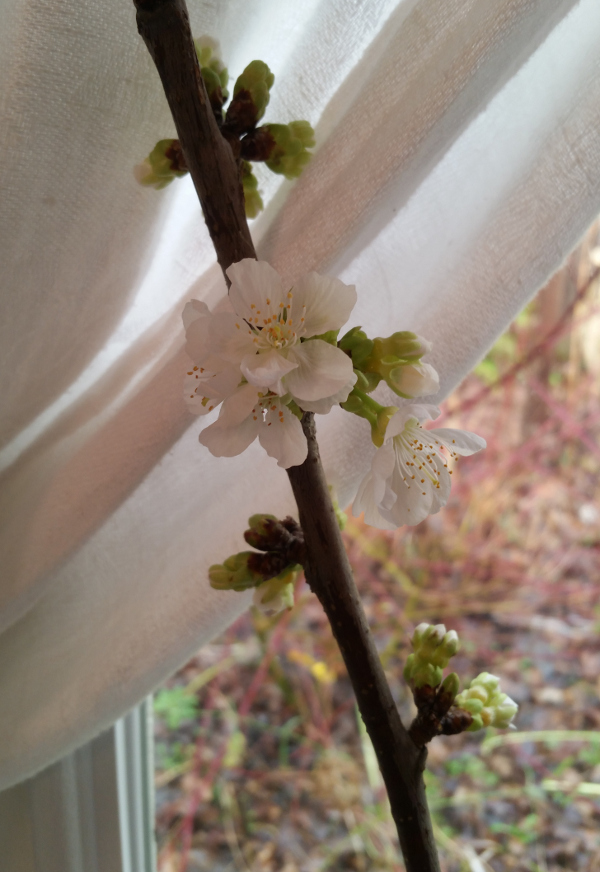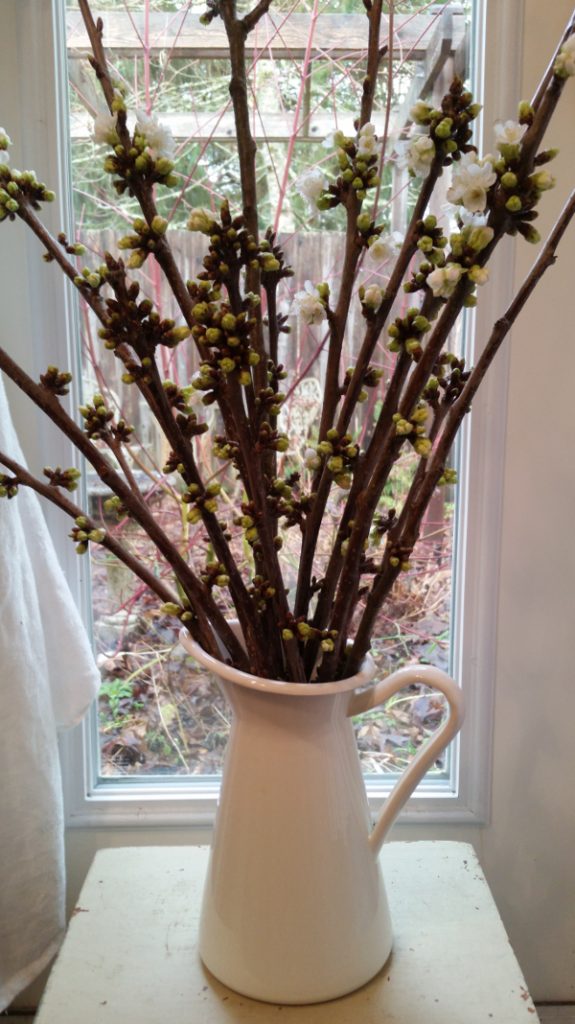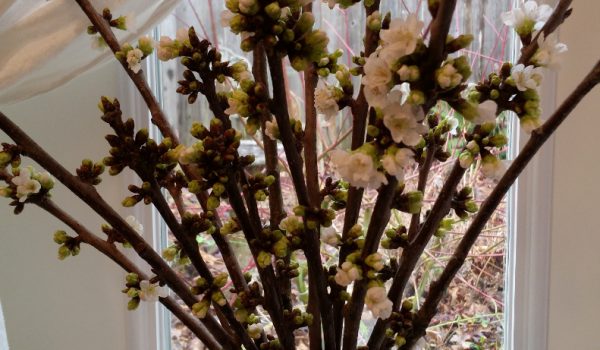
Kids love this project and it’s a great botany lesson for homeschoolers. For the young and young-at-heart, watching the bumps turn into buds then blossoms is simply magical. Hunting for sleepy, winter branches and coaxing them into bloom is such a fun and easy project, especially for children, in fact, it’s ideal for kids. Very quickly the bare branches sport tiny, green buds and in only two to three weeks flowers or leaves emerge. The timeframe fits nicely into a child’s world because they can track changes every few days.
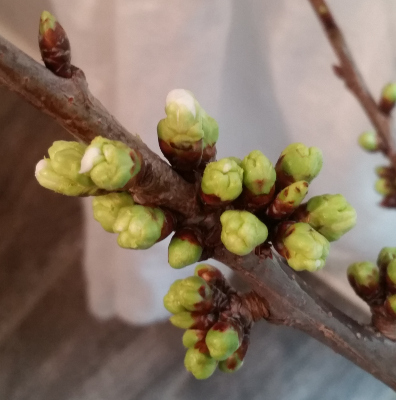
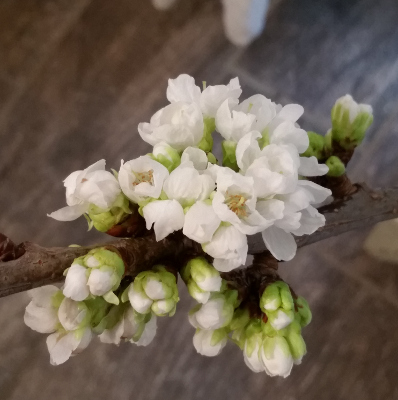
Many branches do well with forcing. Kids especially like pussy-willows, but you can experiment with all kinds of woody plants. Some of the classic choices are:
- Apple
- Crabapple
- Cherry
- Dogwood
- Forsythia
- Hawthorne
- Lilac
- Magnolia
- Pear
- and Quince
Collecting Branches is Fun
Children love to take nature walks and hunt for treasures to bring home. A great time to scavenge is just after a windstorm. Look for branches that are about the thickness of a child’s tiny fingers, but it’s also rewarding to experiment with different sizes.
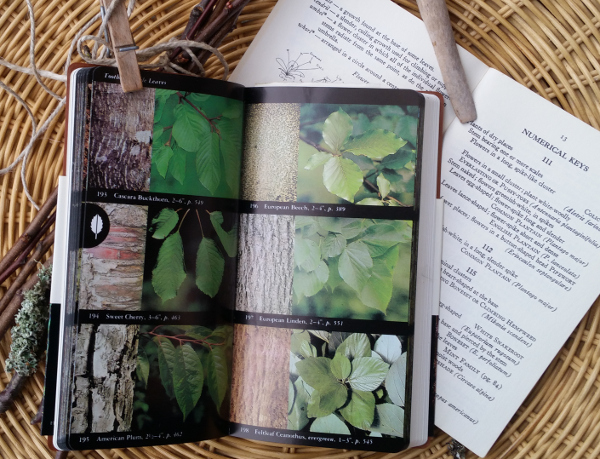
Homeschoolers can carry a winter plant key to identify species when the branches are bare. Identification during dormancy is sometimes a difficult thing to do even for adults, so don’t be discouraged! (Hint: be a detective and look on the ground for fallen leaves.) Your local arboretum can help you find an online or printed version that is specific to your location. If the plant remains a mystery, that can provide yet another level of excitement and anticipation to the project.
Most neighborhood landscapers will happily provide trimmings to an eagerly outstretched hand. If you have a garden of your own, shrubs can withstand a few snips without sacrificing that year’s display of blooms. And if you’re rejuvenating a shrub with a hard pruning, then that’s the perfect time to collect a big bouquet!
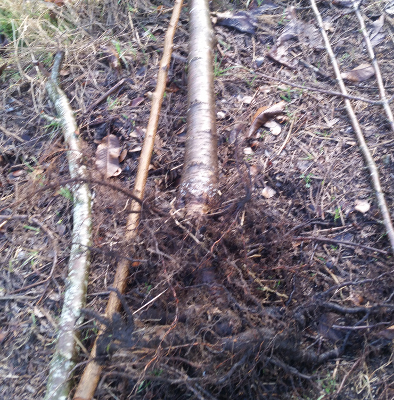
A cherry tree in my garden was not thriving, and even after four years it just didn’t root well. It was the easiest tree removal I’ve ever done—my husband and I rocked it back and forth a few times and it popped right out. Very sad. It’s now a bare-root tree and I will try to find better conditions for it. Sometimes just the act of transplanting can stimulate a plant to grow, so we will wish it luck!
I decided to honor this tree by bringing the branches inside, encouraging them to bloom early. In the horticultural trade, this is known as forcing.
The Process is Easy
Forcing is a project that doesn’t have to be done perfectly to yield results. Chances are you’ll still get blooms even if you need to relax the standards, which often happens when gardening with children. Homeschoolers will no doubt want to experiment with different techniques.
- Try to gather branches when the temperature is above freezing. If they are really frozen let them thaw in a cool storeroom or garage for a day, or ease the transition by gradually introducing the bundle to the inside temperature. If you want to delay their blooming, just keep them in a cool area (in water) until you’re ready to stimulate their spring programming.
- When you’re ready to bring them into your living space, take each branch and make a new cut, preferably at an angle. Ideally, do this while it is submerged in very warm water. This can be hard and risky for kids, so be careful. Or, just recut the branch as best you can and proceed to the next step.
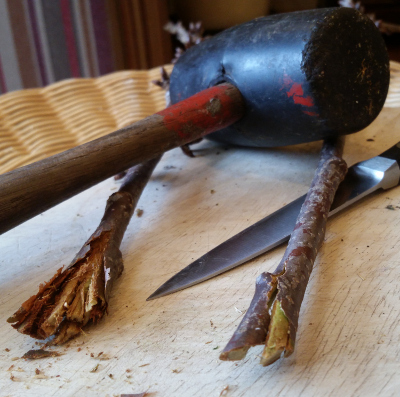
- If the branch is fatter than a pencil, smash the wood just a little. I use a rubber mallet. Try not to pound it to a pulp, but if that happens make paper instead! Pounding has the added bonus of appealing to most children! Alternately, slits can be cut with a knife, but this is risky for kids to do.
- Put the branches in room temperature water and add a natural floral preservative, if you wish, which can reduce bacteria. I usually don’t bother with additives and opt instead to change the water if it gets swampy (despite Ambassador Anura’s objections).
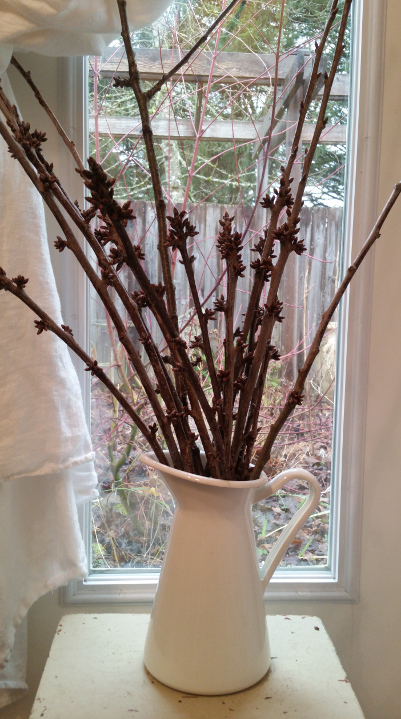
Enjoy Your Arrangement
Find a special place for the arrangement inside the house, ideally away from the bright sun and high heat. The branches don’t need light to bloom—only warmth. In fact, sunlight can cause blooms to age more quickly. However, if your child is enthusiastic about putting the branches in their sunny bedroom window, why break their heart? If the project is an official science experiment, they can divide the arrangement into bundles and test each one in a different location.
My pitcher full of cherry branches is on a stool, low to the ground, in a place where I can easily monitor the progress. I broke a rule by placing the arrangement in front of a window, but it receives little sun this time of year. I can always close the curtain if the light is too bright, but my sun-starved body wouldn’t want to do that!
I like this window location because the distinction between inside and outside is blurred. Inside-out and outside-in. This makes me feel like I’m living right in the garden with all the hungry hummingbirds that are searching for the first sign of flowers. I hope they won’t see the blossoms and try to fly through the glass! They’re usually drawn to brighter colors, but I may close the curtain to err on the side of caution.
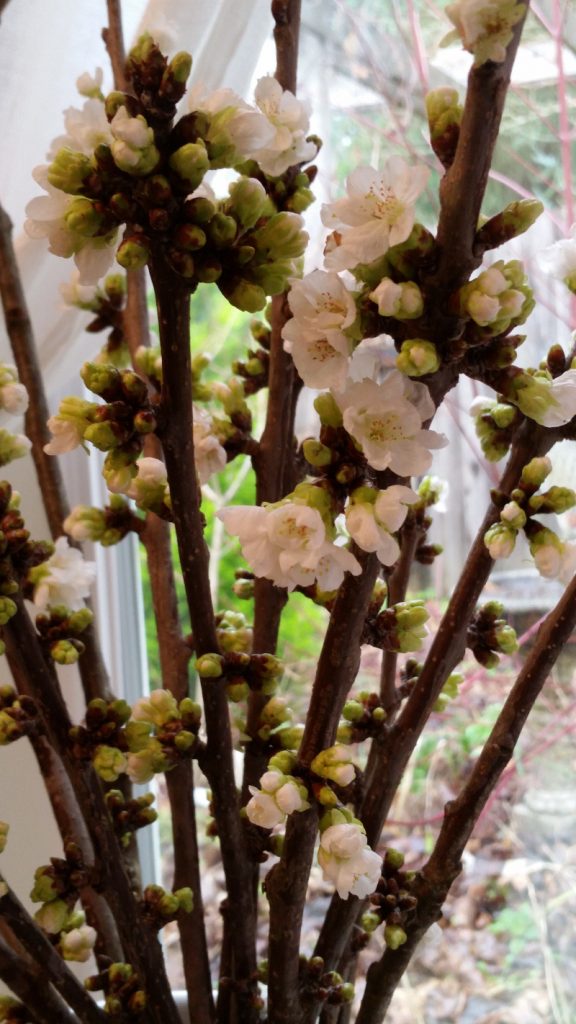
This morning even more flowers unfurled on the once dormant cherry branches. The promise of spring, fulfilled.
May all your buds bloom with joy!
SD
Examples of online Identification Keys:
http://www.eekwi.org/veg/treekey/
This key is from a website called Environmental Education for Kids.
The site has a Dichotomous Tree Key. Dichotomous means: Divided or dividing into two parts or classifications.
http://www.bhort.bh.cornell.edu/tree/keys.htm
This site has both summer (with leaves) and winter (dormant) keys.
Hint: If you don’t see leaves on the tree look on the ground. Even old leaves can give you information.
http://oregonstate.edu/trees/dichotomous_key/
Key for the Pacific Northwest
http://uptreeid.com/
Upper Michigan tree information, including Keys
http://uptreeid.com/KeyC/c01.htm
Upper Michigan winter tree key