

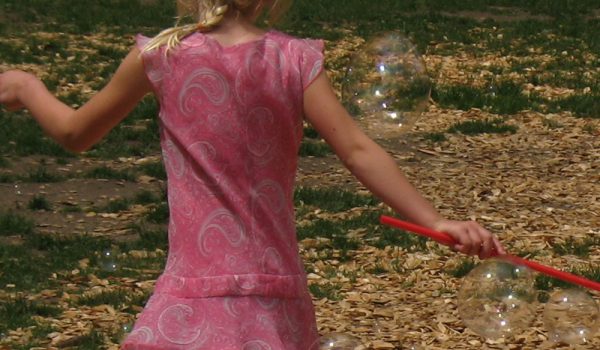
Attention all soap bubbles!
If you want to keep from popping after dancing with the children, remember to apply these fun facts of science. Water is encased between your two soap layers. Earth’s gravity will pull that H2O downward, which will weaken your structure and contribute to popping. You can extend your life as a bubble by softly landing on a wet surface and hanging out there for a little while. However, you do have another option. Look for a tub of water and become a Bubble Mama! That’s right. Instead of completely vanishing when you finally do rupture, you can create future generations of daughter and granddaughter bubbles!
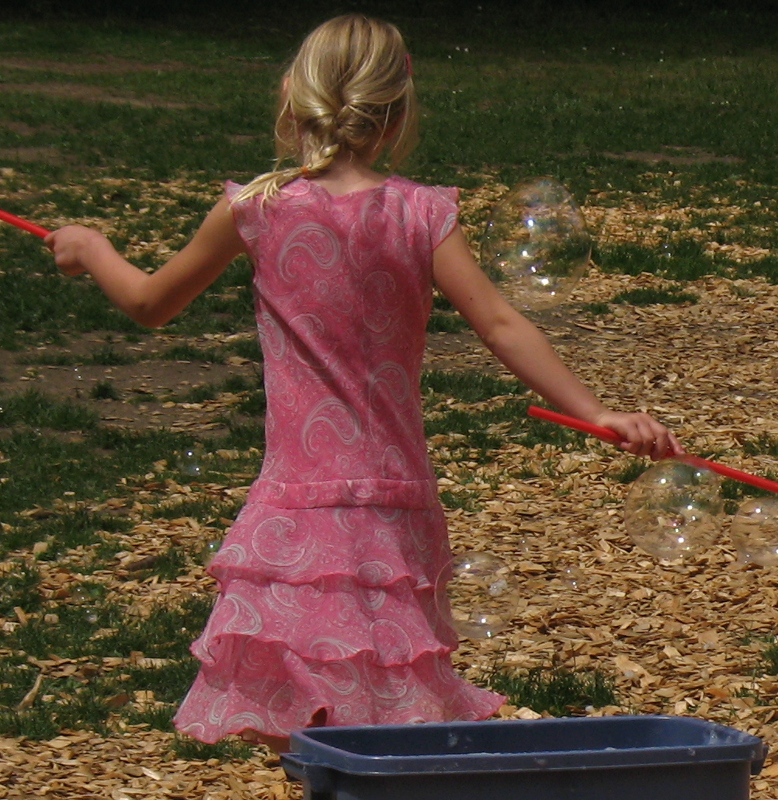
Meet the Bubble Scientists
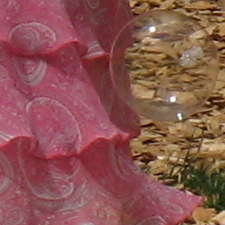
Yesterday I created a fanciful Instagram post about bubbles, never intending to write more. But the whole idea of bubbles having Bubble Babies was too captivating to cast into the endless stream of Instagram images. Bubble Babies need a stable home, and I found a good one—the office of James Bird, Ph.D., assistant professor at Boston University. I’ll call him the grandfather of Bubble Babies.
It’s easy to be enchanted by the beauty and ephemeral nature of bubbles. Perhaps that is how Dr. Bird began his research project at Harvard, but he ended up discovering how a single bubble can create numerous small bubbles when it ruptures, rather than vanishing. Dr. Bird and his fellow scientists authored an article published in Nature, Vol 465, 10 June 2010, titled: Daughter bubble cascades produced by folding of ruptured thin films.
Let me go on record as saying that I am a science enthusiast. I’ve never participated in a Citizen Scientist project or been formally trained beyond a few college science classes. Although I still don’t comprehend all the science behind Bubble Birth, I now know where to go to find the scientists who study fluids and things that behave like fluids, such as ants. If you don’t believe me check out all the links at the end of the blog. This video shows how ants actually move like a liquid!
Meet the Bubbleologist and Bubble Artists
I would love to show you pictures of people who earn a living playing with bubbles, but I haven’t taken any. I can, however, give you some curated links! (See all Bubbleologist below.)
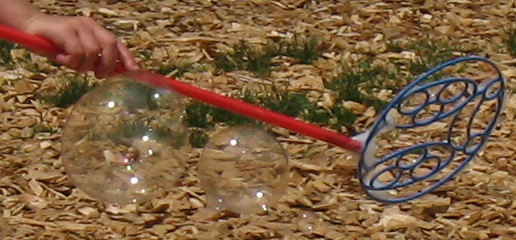
My favorite link is a video about Andrew Suttar aka Doctor Froth. This five-minute film is stunningly beautiful and an inspirational masterpiece, especially for all who need encouragement to follow their dreams.
In his video, Andrew Suttar says the entire universe is made of bubbles, and yet I somehow managed to under-appreciate them. To me, this means we are never too old, or too young, to see life in a new and fresh way. And as Andrew says in the film, now I see bubbles everywhere. And sometimes I even see myself looking back!
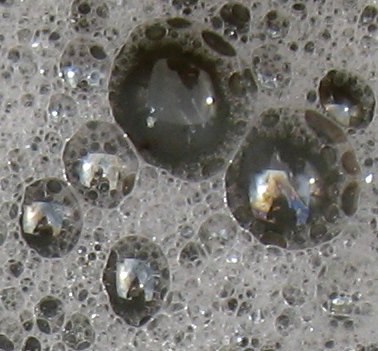
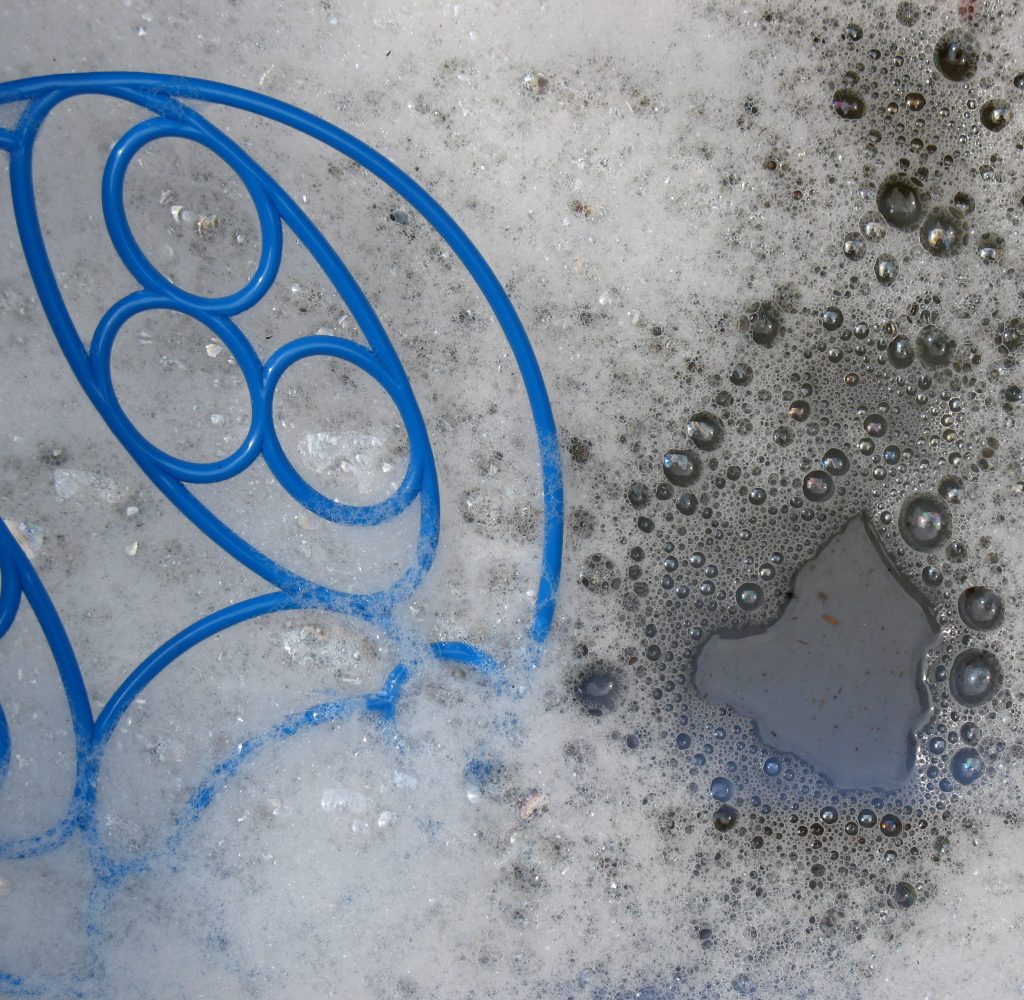
While processing my bubble photos (which I hadn’t seen in years) I zoomed in on the tub of froth and saw my own reflection! Yes, reflections happen all the time, but it proved to be a valuable lesson. This little event reminded me to slow down and look deeply at the world. You never know what you might find!
May your day bubble with joy!
SD
Fun and Fascinating Links
Bubbleologist links: I promise that you won’t be disappointed if you check out all of these fun and fascinating folks.
Andrew Stutter
https://www.facebook.com/drfroth
https://www.youtube.com/watch?v=zRB9d99mWIg
Megan Mciver
https://www.bubbleologist.com/
Instagram @meganmakesbubbles
Jesse Ward
https://www.facebook.com/JesseWardBubbleologist/
Instagram @jesswardbubbleologist
Kapten Buchbossa
https://www.facebook.com/kaptenbuehbossa
Instagram @kaptenbuehbossa
Maxwell the Bubbleologist
https://www.facebook.com/maxwell.the.bubbleologist
@maxwell.the.bubbleologist
Bubble Science links:
https://www.bu.edu/eng/profile/james-bird-ph-d/
https://www.bu.edu/fluidlab/
Dr. Bird’s contact information and website. He is now a professor in the engineering department at Boston University. By the way, I haven’t ever met or talked to Dr. Bird, but he seems like a really neat teacher!
https://www.bu.edu/fluidlab/files/2016/01/Bird-et-al.-2010-Daughter-bubble-cascades-produced-by-folding-of-ruptured-thin-films.pdf
A PDF of Dr. Bird’s paper.
https://en.wikipedia.org/wiki/Citizen_science
About citizen science.
https://www.citizenscience.gov/
Citizen science projects
Links to ants behaving like fluids:
http://www.nytimes.com/2013/12/17/science/ants-that-can-flow-like-a-fluid-or-move-like-a-solid.html
A wonderful video which I hope the NYTimes continues to make available.
https://www.youtube.com/watch?v=uZSqx0PJ8XU
Another awesome ant video that has been viewed over 2 million times.
https://www.youtube.com/watch?v=B0QVXVgcdhs
Georgia Tech Associate Professor David Hu explains the technological importance of understanding fire ant behavior.
http://www.hu.gatech.edu/Liu/like-a-solid-fluid/
Fire ants videos at Georgia Tech.
https://www.nature.com/articles/nmat4450
Mechanics of Fire Ant Aggregations. Fire ants link their bodies to form a variety of structures allowing them to drip, spread, or withstand applied loads.
